
Awaro Pro IP67
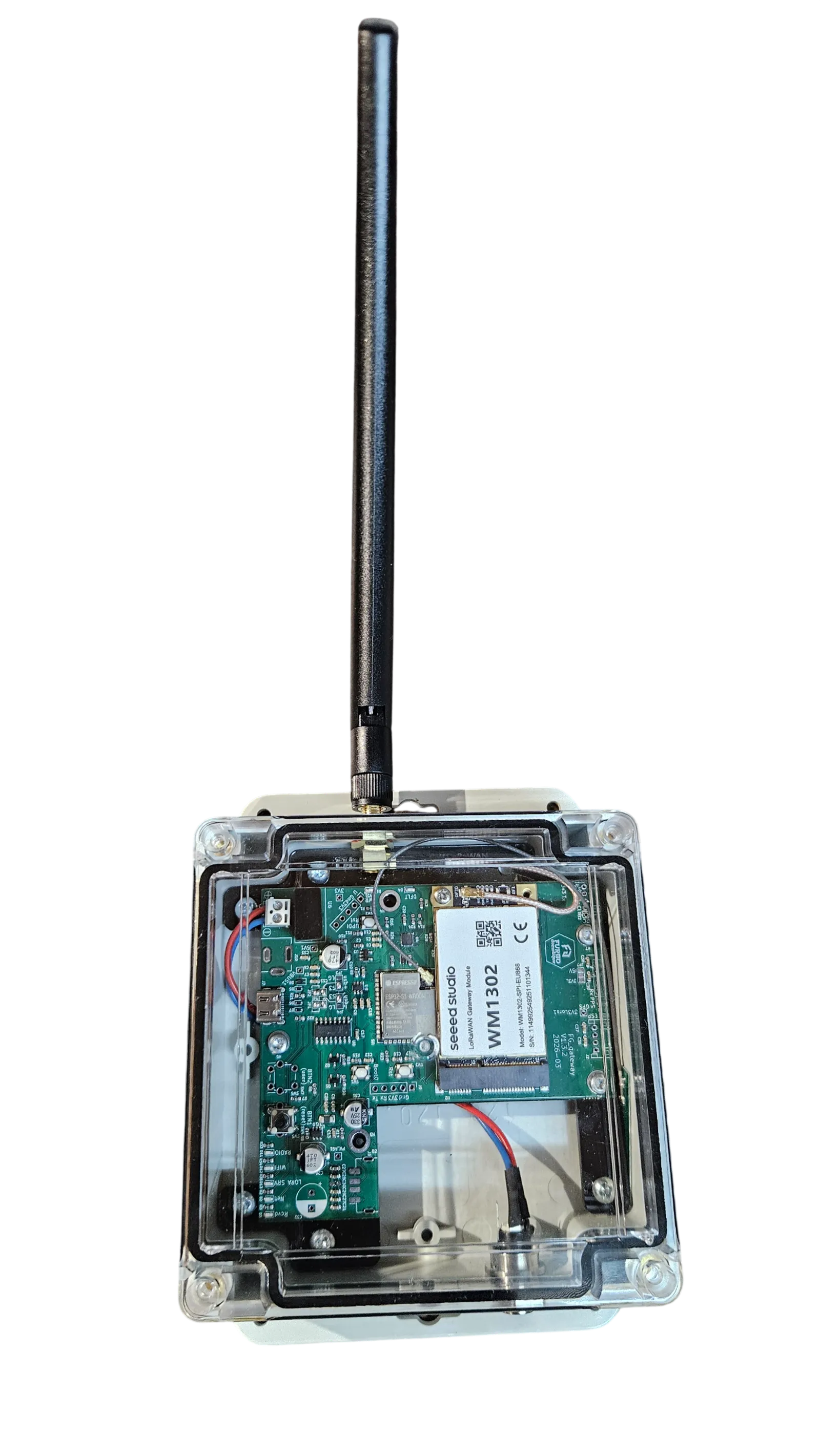
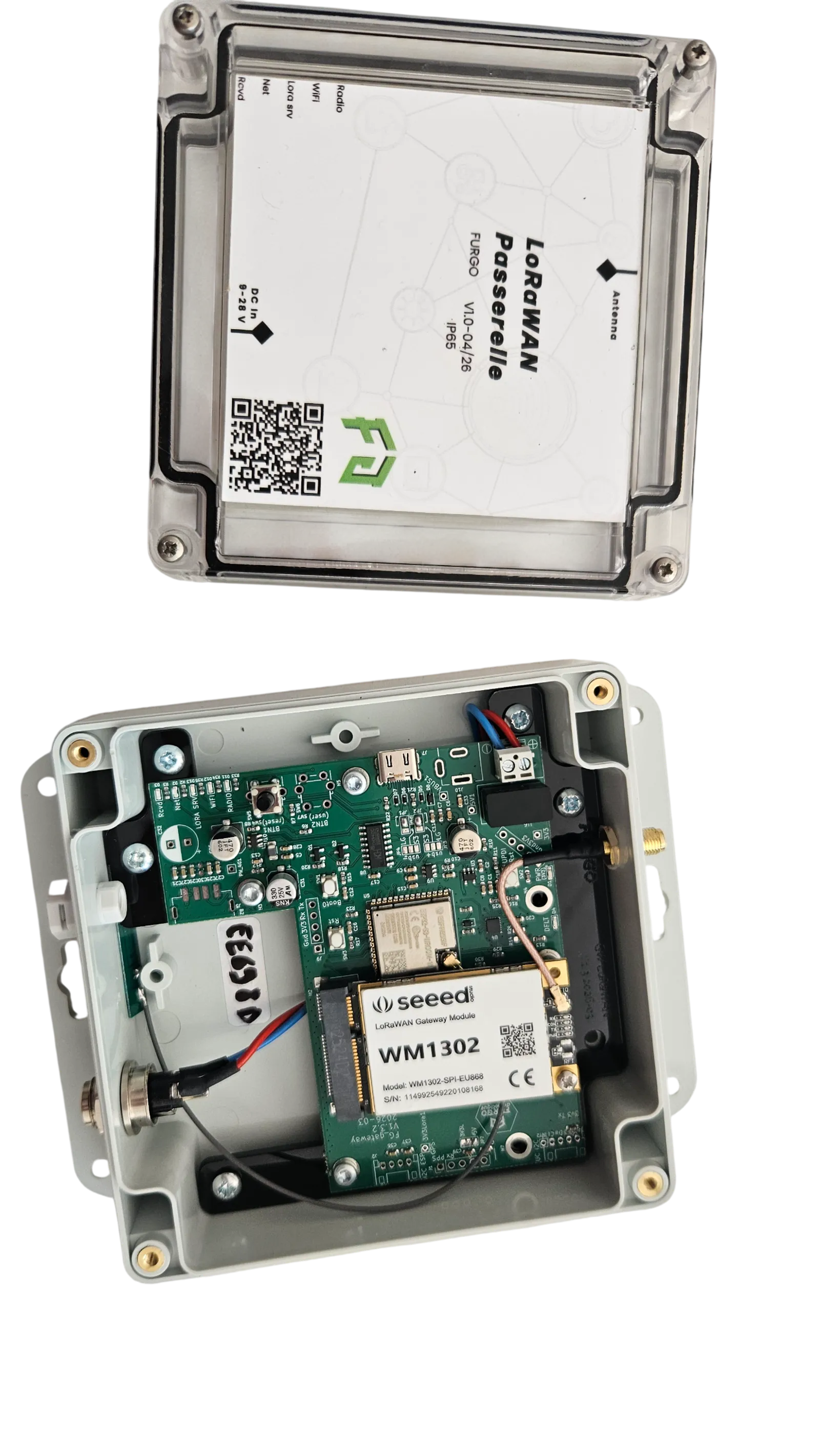
189 € incl. VAT — optional integrated 4G: €240 incl. VAT- All-in-one ruggedised enclosure, ready for the outdoors
- Antenna + 12 V supply included, waterproof M8 connector
- Industrial electronics −40/+85 °C
Awaro, the LoRaWAN box that is simple at last: thousands of off-the-shelf LoRa sensors compatible with your home, Home Assistant and Domoticz with no plugin, integrated LoRaWAN server (up to 128 sensors) or external server — no subscription. Two versions: Pro IP67 (€189 incl. VAT) and Lowtech (€108 incl. VAT).
User manual (PDF) All documentation
A LoRaWAN gateway opens the door to thousands of off-the-shelf LoRa sensors — temperature, humidity, soil, tanks, gates, meters — right at home, in your home automation or your business platform. That is the job of Awaro, our LoRaWAN box, available in two versions: Pro IP67 (ruggedised all-in-one enclosure, €189 incl. VAT) and Lowtech (USB, €108 incl. VAT).
On the farm side, the maths is quickly done: most of our sensors come in a GSM version (SIM included) and a cheaper LoRa version. From 3 or 4 sensors on the same site, the gateway pays for itself on the price difference, and every additional sensor widens the saving. A single box covers several hundred metres to several kilometres depending on terrain — including where the mobile network does not reach. And everything reports to the same Supervisor, which also accepts LoRaWAN sensors from other brands.
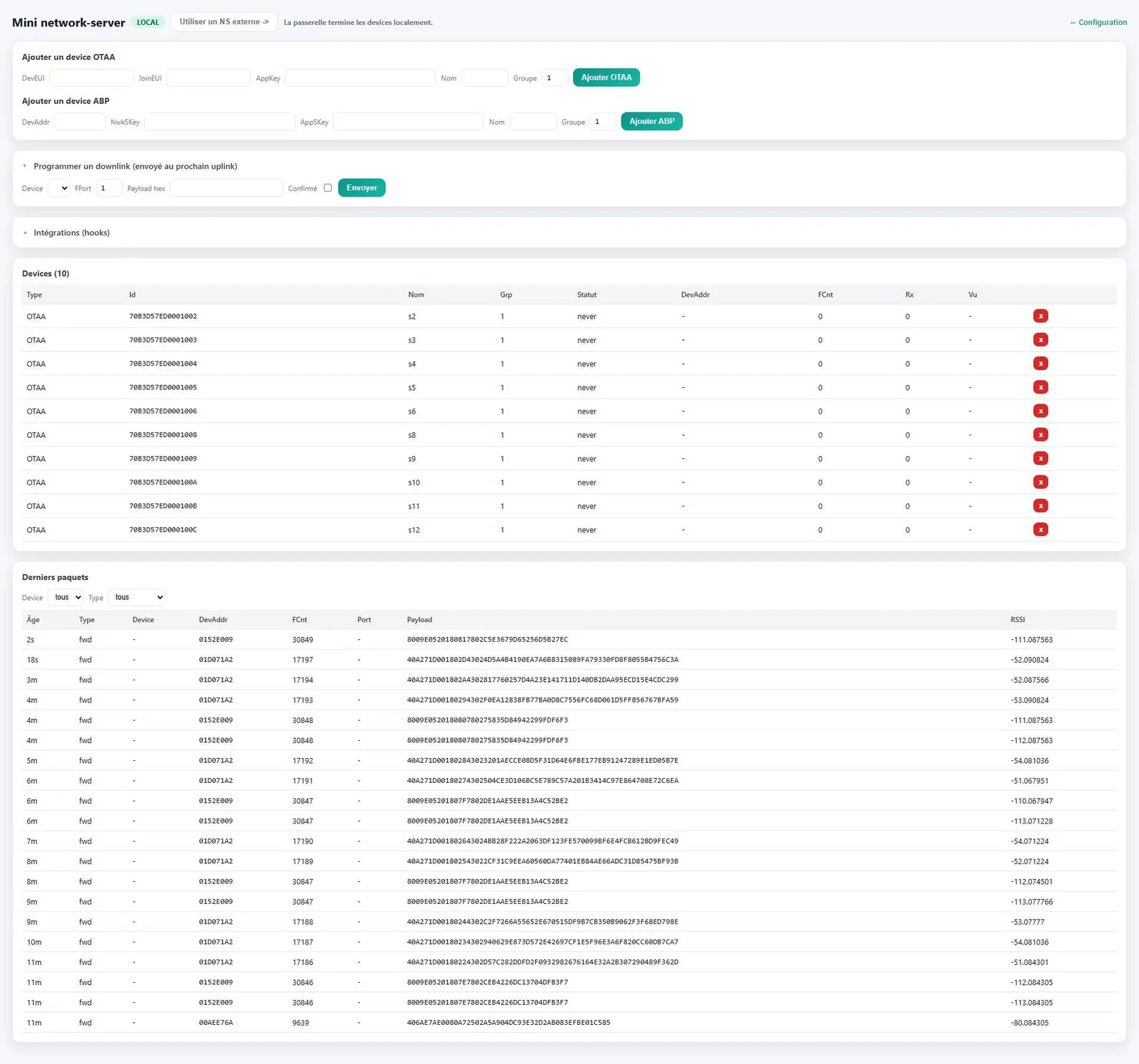
First, simplicity. A classic LoRaWAN gateway is only a relay: it picks up the radio signal and forwards it, encrypted, to a server you have to run somewhere — The Things Network cloud, or a ChirpStack instance to install, host and maintain. Awaro gives you the choice, from a straightforward interface:
Then, the argument that changes everything for the home as much as for the farm: Home Assistant and Domoticz work natively, with no plugin — Domoticz compatibility has been validated without any external plugin. Your sensors show up on their own, decoded in plain text thanks to the built-in decoding assistant (Dragino decoders included). Concretely: thousands of LoRaWAN sensors on the market become usable at your place, within minutes, with nothing to host.
Retail prices observed in July 2026 — check them, they change:
| Gateway | Observed price | Pro | Local server + MQTT |
|---|---|---|---|
| SenseCAP M2 (Seeed) | ~$99 | no | no (relay only, cloud required) |
| Dragino LPS8v2 | ~€196 | no | yes (built-in ChirpStack) |
| Dragino DLOS8N | ~€272 | IP65 | no |
| RAK WisGate Edge Pro | ~€537 | IP67 | yes |
| Milesight UG67 | ~€905 | IP67 | yes |
| Awaro Pro (FURGO) | €189 incl. VAT | IP67 | yes |
| Awaro Lowtech (FURGO) | €108 incl. VAT | no | yes |
The picture: gateways with a local server do exist — Dragino embeds a ChirpStack, RAK and Milesight have their self-contained models. But a weatherproof outdoor box with a local LoRaWAN server currently costs over €300 — and up to €900; and the affordable models remain indoor boxes, often complex to configure. Awaro Pro does all of it for €189 incl. VAT — with, above all, a set-up designed for non-IT people, and power consumption ten times lower than Linux-based gateways (~0.4 W versus 5 to 10 W), which makes it genuinely solar-powerable.
| Awaro Pro IP67 | Awaro Lowtech | |
|---|---|---|
| Use | outdoors, all-in-one, ruggedised | indoors, home automation (Home Assistant, Domoticz…) |
| Enclosure | waterproof IP67, antenna mounted on it, sealed connectors | compact, not waterproof |
| Power | waterproof M8 connector, 12 V supply included | USB only |
| Temperature | −40 to +85 °C (industrial electronics) | −20 to +65 °C |
| 4G | optional, integrated in the enclosure (€240 incl. VAT) | — |
| Price | €189 incl. VAT | €108 incl. VAT |
The software — built-in server, decoders, integrations, free updates — is identical in both.
Here is what changes with this one:
The full manual is delivered by e-mail — set-up, built-in server, connection to Home Assistant, Domoticz or ChirpStack, troubleshooting. Awaro also has its own dedicated page: awaro.fr. The product is joining the catalogue: write to us for a complete farm-equipment project — that is exactly what we already deploy on a quote basis.
The Pro version (€189 incl. VAT) is an all-in-one ruggedised IP67 enclosure built to live outside: waterproof M8 connector, 12 V supply included, industrial electronics from −40 to +85 °C, optional integrated 4G. The Lowtech version (€108 incl. VAT) simply plugs in over USB, is rated from −20 to +65 °C, is not waterproof, and targets home automation networks such as Home Assistant or Domoticz. The software is identical in both.
For 1 to 3 isolated sensors, the GSM version (SIM card included) remains the simplest: nothing to install. From several sensors grouped on the same site, the LoRa gateway becomes worthwhile: LoRa sensors cost less and a single gateway collects them all.
No — you choose. Either the LoRaWAN server embedded in the box: sensors authenticated, readings decrypted on site and delivered onto your network, with data savings and webhooks handled locally. Or forwarding to an external server (TTN, ChirpStack), up to two simultaneously. Or both at once, in hybrid mode.
Yes, natively and with no plugin: the box publishes every decoded reading and Home Assistant discovers it on its own. Same on Domoticz, where compatibility has been validated without any external plugin. Jeedom and Node-RED tap into the same MQTT stream, and a direct USB stream is also available.
On the Pro version, the 4G option (€240 incl. VAT) integrates the modem right inside the enclosure, with a built-in sensor filter to save on the data plan. On the power side, the box draws around 0.4 W at idle: a small solar panel with a battery is enough.
You never lose access: the box tests the connection before adopting it (showing the address it will get), and if its WiFi becomes unreachable, it automatically reopens its own backup network so you can reconfigure it.
A second, independent microcontroller monitors it permanently and restarts it automatically if needed. It is designed to run alone, for a long time, far away.
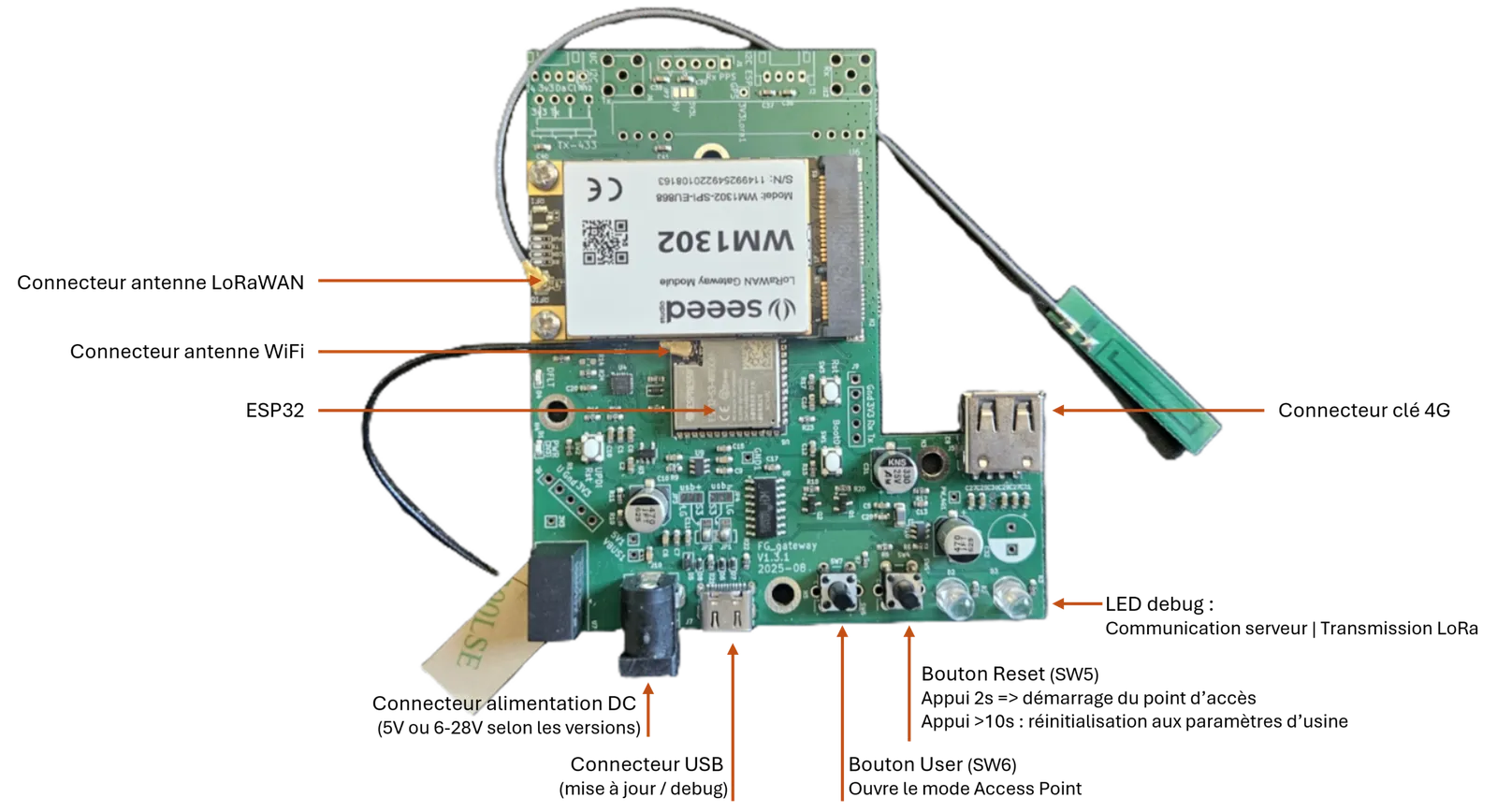
Yes: the radio module is replaceable, the board is trimmed down to the essentials (processor and radio module), and the hardware plans are published (open hardware). Software updates are free. No forced end of life.
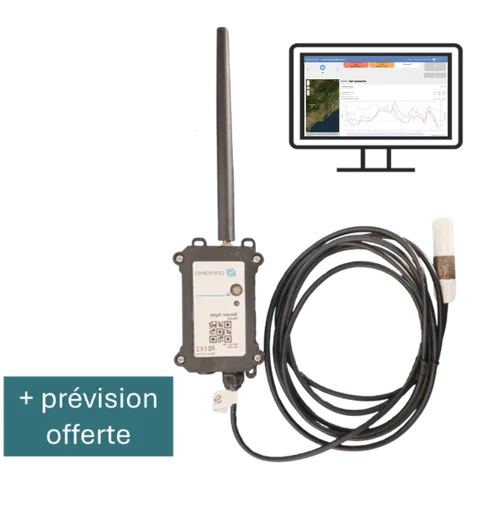
The sensor that calls you in the middle of the night when frost threatens, on up to 10 numbers. Installed in 5 minutes, no gateway.
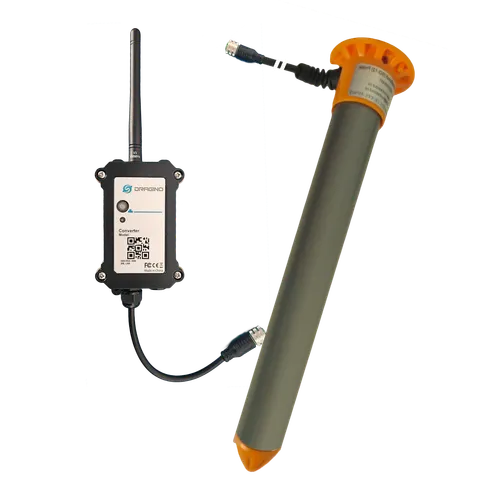
The “orange cap” probe: from 20 cm to 1.20 m long and from 2 to 8 measurement depths, to read the full water profile of your soil.